
Singapore’s Atomic Clock Breakthrough and the Long Road to Market
A scientific achievement at the National University of Singapore offers a useful starting point for a bigger discussion: what does it take to turn exceptional research into a commercial opportunity?
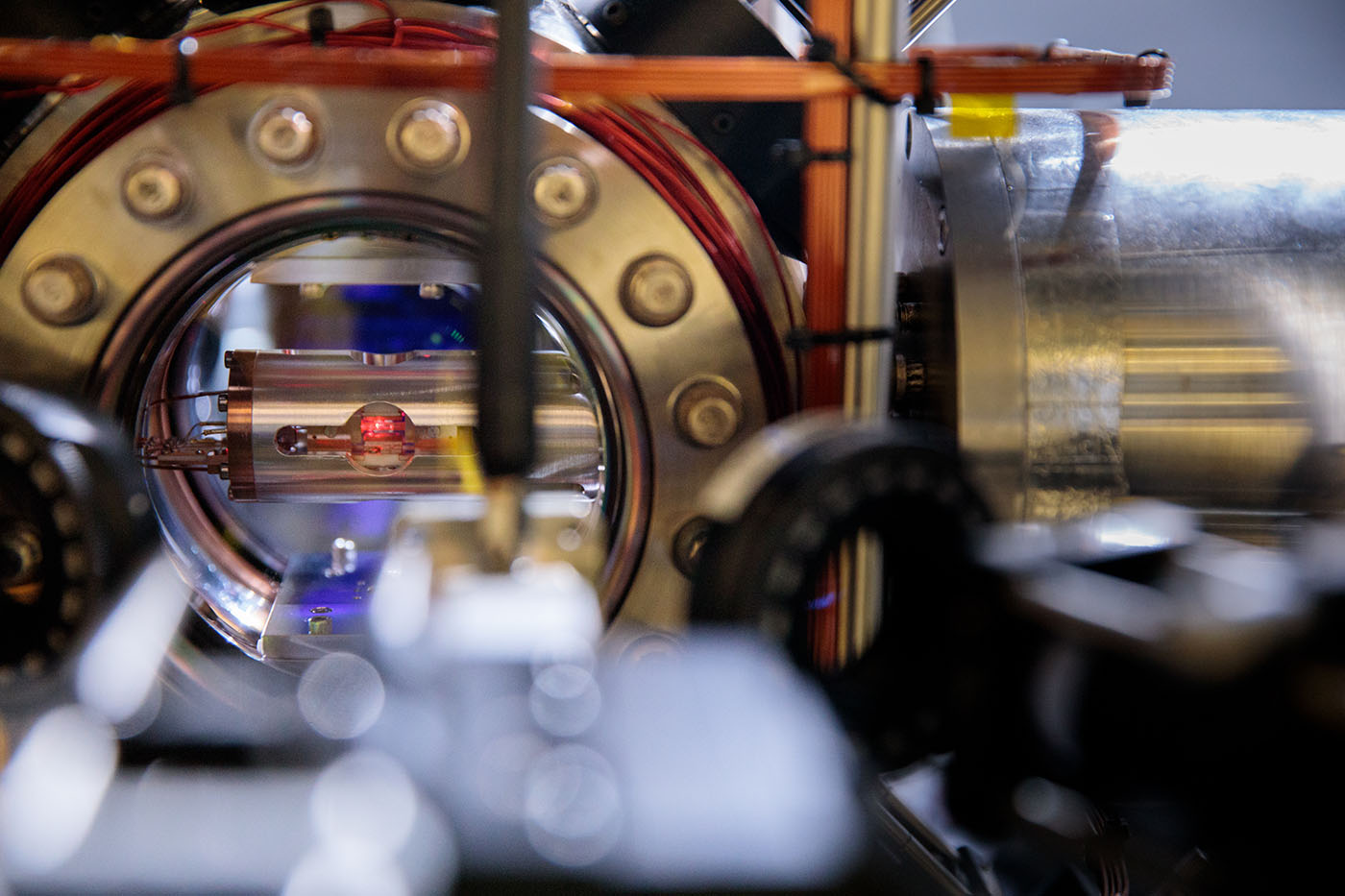
Scientists at Singapore’s Centre for Quantum Technologies have developed a lutetium atomic clock that they describe as the world’s most accurate. According to NUS’s announcement on 23 September 2026, the team reported an uncertainty of 1 × 10⁻¹⁹, the lowest reported for an optical atomic clock to date.
The achievement follows more than a decade of work. For fund managers and family offices interested in deep technology, that development period is as relevant as the record itself. It illustrates the time and specialist expertise that can sit behind a breakthrough before its commercial potential becomes clear.
The next milestone is portability
The researchers’ next step is to miniaturize the laboratory clock into a transportable system. NUS reports that lutetium’s properties make the clock transition relatively insensitive to temperature and magnetic field changes, an advantage the team hopes to preserve as the system becomes smaller.
More accurate clocks could support fundamental physics research and measurements of gravitational changes across the Earth. Turning those possibilities into a product, however, requires more than scientific performance. A potential customer would also need to understand the system’s cost, operating requirements and practical advantage over existing equipment.
What patient capital would need to assess
The NUS announcement describes a research milestone. It does not establish a commercial offering, a spinout or an available investment. Any future investment assessment would need to address several separate questions:
- The first customer: Who needs this degree of accuracy, and what problem would it solve for them?
- The route to market: What engineering work is needed to make the system transportable, reliable and practical to operate?
- The commercial rights: How would intellectual property ownership and licensing be arranged?
- The funding milestones: How much further development would be required, and what evidence would justify each additional commitment of capital?
A Singapore story worth following
This breakthrough offers a concrete example of the research capability being developed in Singapore. Its eventual commercial significance will depend on whether that capability can be translated into equipment or services that customers value.
For investors following the sector, the next developments to watch are a transportable prototype, demonstrated use cases and a clearer commercialisation pathway. Those milestones would help connect an impressive scientific result with a potential business.
Source: National University of Singapore, “Singapore scientists build world’s most accurate atomic clock”, 23 September 2026. Commercialisation and investor considerations above are editorial analysis.





Leave a Reply